"Knowing to whom you are speaking is of the utmost importance. But this
goes double for teaching technical topics. If you assume too much about your
audience or select the wrong technical level to address, the results can be
disastrous. You can actually leave your audience not only just as ignorant
about your topic as when you started, but also much less likely to ever
attempt learning the topic again. Once burned, twice shy."
Allowing the presentation to move according to steps or blocks will allow one to ensure that the content is covered in a manor that will make sense to the audience, but more importantly allows one to present the content without getting lost in the details. Once the larger blocks of information are selected, its important to break down the large blocks into smaller points of information. For example on of the first blocks to consider is; an introduction of the individuals whom worked on the project, the title of the project, and for whom the project was done for. Following this, presenting the core content and achievements of the project would be moving too quickly for the audience. Rather at this conjunction it would be in the presenters favor to show the audience the issues and why the team was contacted in the first place. After the presentation of the problems at hand, there can be a smooth detour into the presentation of the solution.
Through out the presentation to remain engaged with the audience its highly advised to have an projector that can show images that one can reference to. Doing so allows one to guide the audience in the form of thinking the that project team had. It's important to remember that the client's information should be obscured when showing images. In the best case fake input to the images should be used to prevent a breach of nondisclosure. An example of this can be seen below from Apple's documentation on identifying product registration, note the presentation of the content, however at the same time obscuring the information presented.
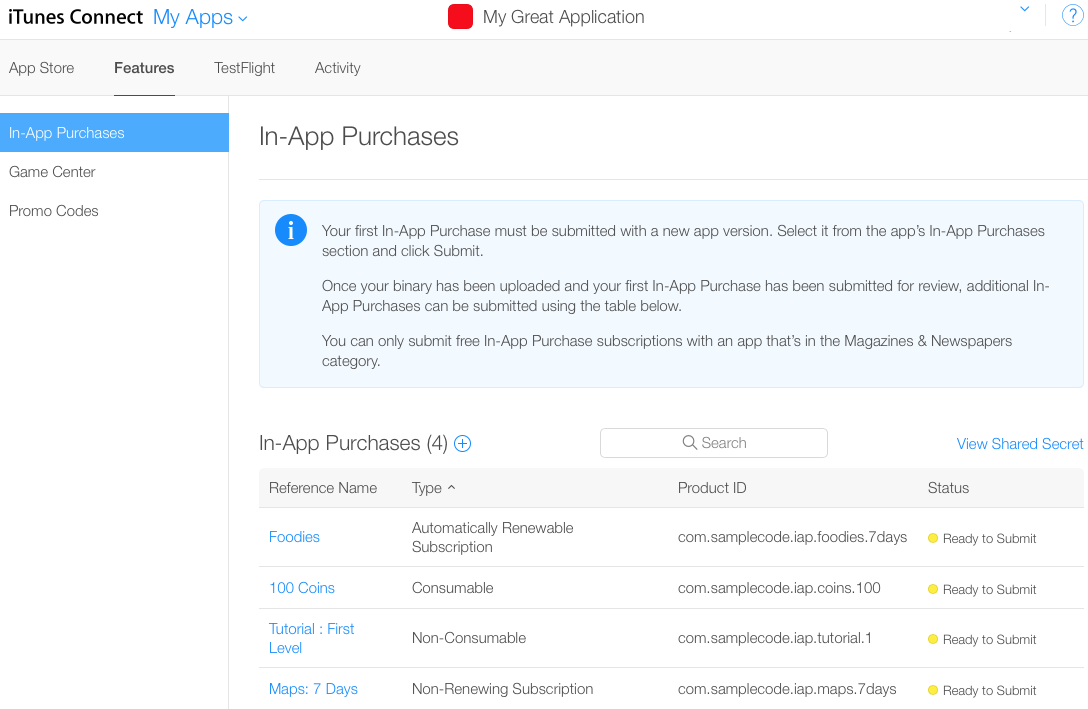
By following the steps above, and practicing the presentation before hand. One can be assured that they will preform well during the critical moments before the client is allowed to select if the project continues. Just recall; organization into blocks of information, be genuine to the audience, insure that you are being engaging through out the project. Keeping all these in mind will make the whole ordeal less stressful.
Reference:
In-App Purchase Product Identifiers. (2015, November 10). Retrieved November 23, 2015, from https://developer.apple.com/library/ios/qa/qa1329/_index.html#//apple_ref/doc/uid/DTS40009463
Tennent, R. (n.d.). Technology in Libraries: Essays in Honor of Anne Grodzins Lipow. Retrieved November 23, 2015, from http://techinlibraries.com/tennant.pdf

No comments:
Post a Comment